
How a gap gets found
Four inputs,
one profile
- 01
Profile the learner
A short profiling survey establishes role, level and where somebody thinks they stand.
- 02
Watch what happens
Course completion and quiz scores adjust the profile, so it is not left as self assessment.
- 03
Score real practice
Rubric lines from roleplay attempts are the strongest signal, because they measure production.
- 04
Recommend the fix
The gap points at the course that addresses it, on the learner's own screen.
For the learner
Training that
comes and finds you
- A profile across 65 tracked skills, not one competence score
- Recommendations on the learner's own home screen, ranked by gap
- A weak rubric line after a practice attempt links straight to the course for it
- Progress visible to the learner, so the profile is not something done to them
For the manager
See the gap
before it costs you
- A team view, so a shared weakness is visible before a project exposes it
- Readiness by skill rather than by course completion count
- The manager sees their own reports only, which keeps the view usable
- Reports scheduled by email, so nobody has to log in to be told
Before you ask
Common questions
Where does the skill list come from?
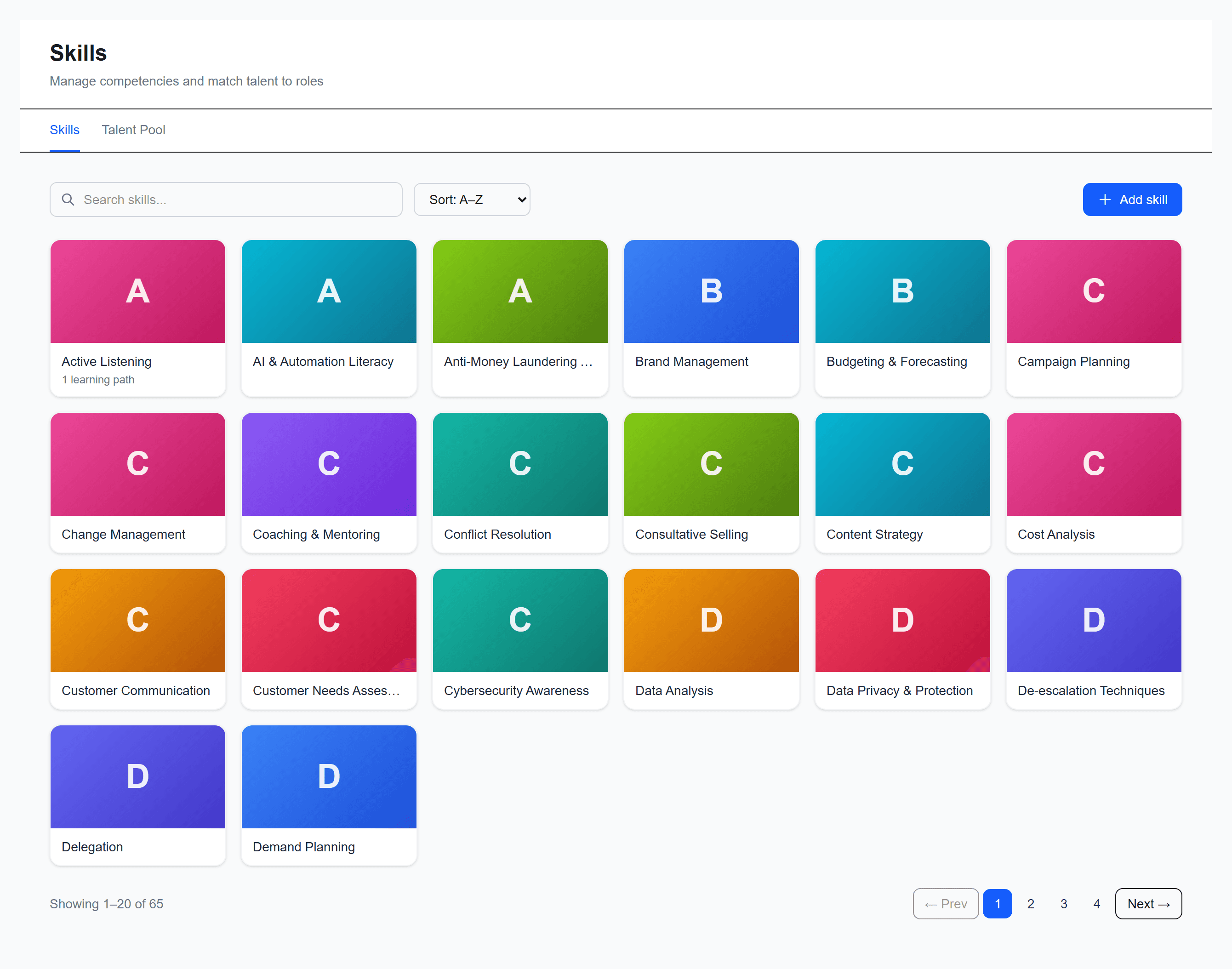
65 skills ship with the platform, grouped into categories, and they cover the common corporate ground. You can add your own for anything specific to your business.
Is this a performance rating?
No. It tracks skills against training and practice, and it is visible to the learner. It is not a ranking of employees and there is no hidden score behind it.
Does the learner have to fill in a long form?
No. The profiling survey is short and gamified, and after that the profile updates from what people actually do rather than from what they said once.
Can we see gaps across a whole team?
Yes. A team level view shows where a weakness is shared, which is the difference between coaching one person and fixing a training programme.