
Job one
Build a course
from a description
The reason most internal training never gets made is not that nobody knows the subject. It is that turning what somebody knows into a structured course is two weeks of work nobody has.
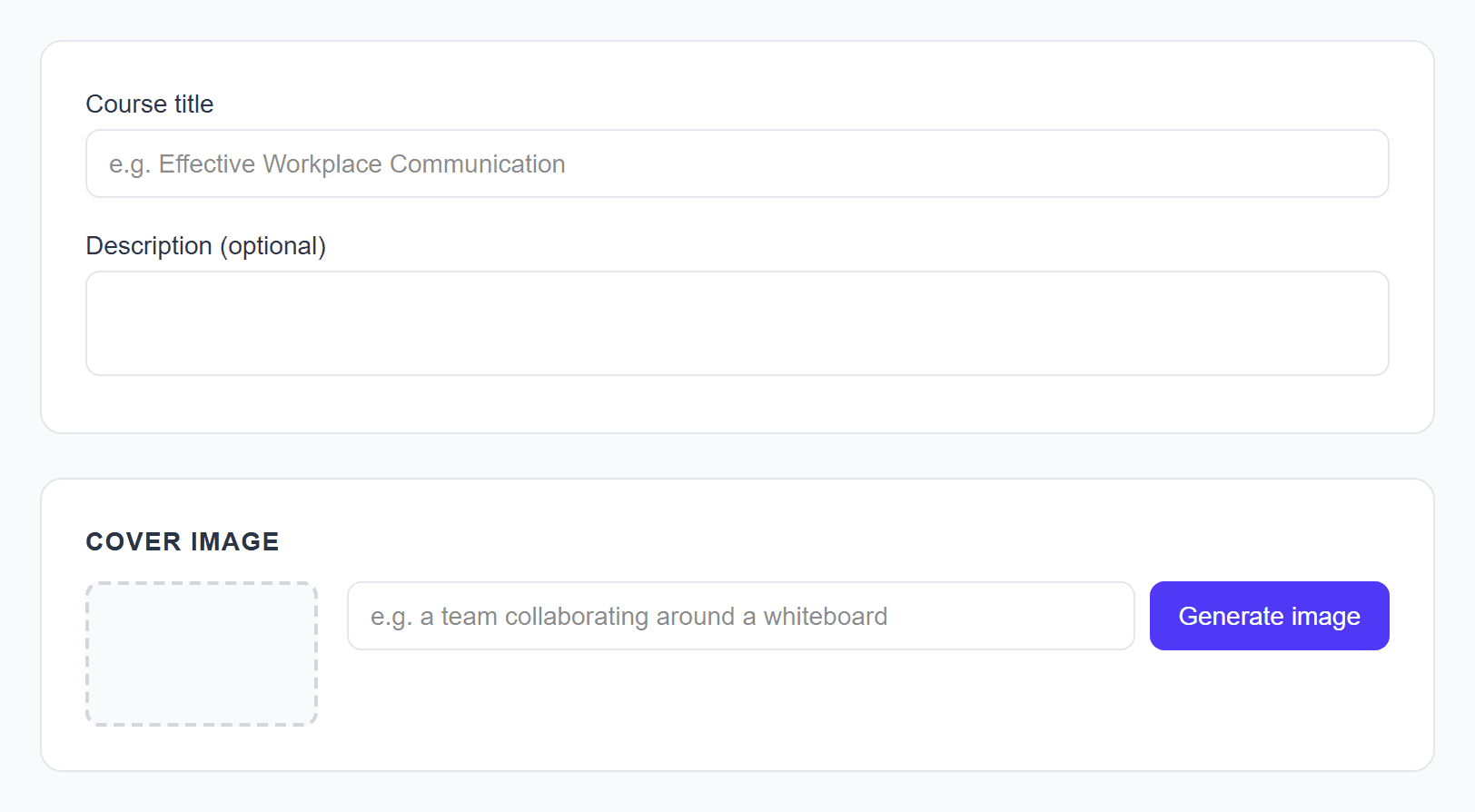
- Describe the course module by module, in plain language
- Lessons are written, quizzes are built with a pass mark you set
- Images are generated per lesson, and the whole thing is narrated
- It publishes as real SCORM, not a proprietary wrapper you cannot export
- You edit it afterwards. The draft is a starting point, not a finished decision
Job two
Score a conversation
against a rubric
A multiple choice question about handling a complaint tests whether somebody can recognise the right answer. It does not test whether they can produce it under pressure, out loud, to a person who is annoyed. 39 scenarios do.
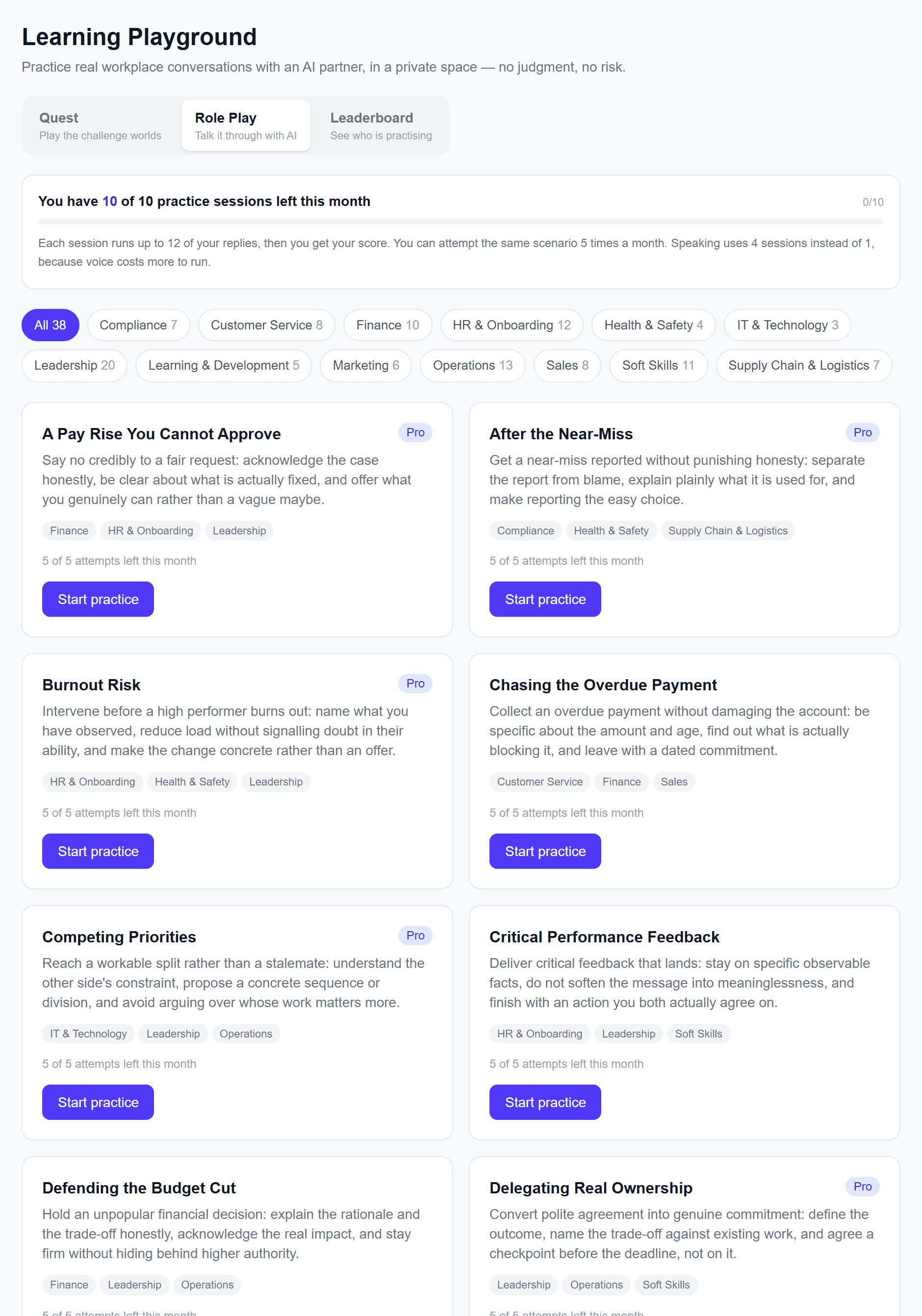
- The AI plays the counterpart and holds its position rather than agreeing
- Text or voice, so the practice matches the channel the job uses
- Marked against a written rubric for that scenario, not a general impression
- The transcript and the score are both available to a manager for coaching
- A scored attempt exports as a PDF, so it can leave the platform as evidence
Job three
Match a person
to what they are missing
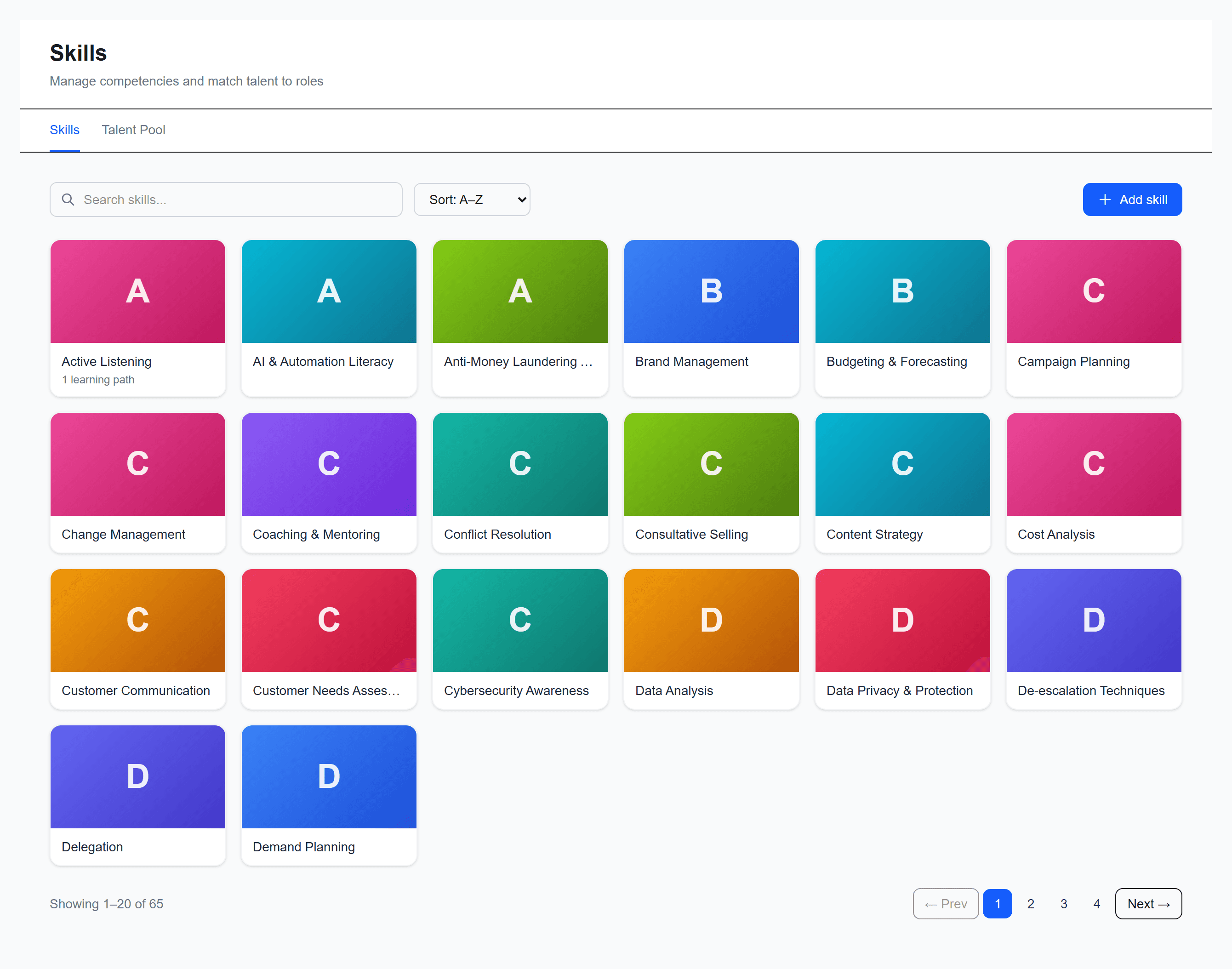
Every learner has a profile across 65 tracked skills. Gaps drive what gets recommended, which turns a catalogue from something people have to go looking through into something that comes and finds them.
- 65 skills tracked per learner, not a single competence score
- Gaps identified from assessment and from scored practice, not self reporting alone
- Recommendations follow the gap, so training finds people rather than waiting
- Weak rubric lines from a practice attempt point at the course that addresses them
- A team level view, so a gap across a group is visible before a project exposes it
What it does not do
Three decisions the AI
does not get to make
A limit stated up front is worth more than a capability claimed vaguely.
It does not publish unreviewed
A generated course is a draft in your library. Somebody has to read it and press publish, because the content carries your name and not ours.
It does not judge a person
It scores an attempt at a scenario against a rubric. It does not rate an employee, and there is no hidden ranking of people behind the screen.
It does not pool your content
Your courses, your learners and your practice transcripts stay in your workspace. They are not used to improve anything anybody else sees.
Before you ask
Common questions
Do we own the courses the AI generates?
Yes. They publish as standard SCORM in your library, and you can edit, export or take them elsewhere. A generated course you cannot get out again would not be worth generating.
Is our content used to train a model?
No. Your courses, learners and practice transcripts stay in your workspace and are not used to improve anything outside it.
How accurate is the generated content?
It is a first draft written from your description, and it needs a subject expert to read it before it goes live. That is why nothing publishes automatically. The time it saves is the structuring, not the checking.
Does the roleplay work in Urdu?
The platform interface runs in English, Urdu and Arabic. Scenario practice today is written and scored in English, and we would rather tell you that than let you find out after signing.
Is AI usage charged separately?
Generation consumes credits included in your plan, so ordinary use is covered by the subscription rather than metered back to you line by line.